
Call
In a world shaped by rapid technological advancements and pressing environmental challenges, this conference will explore how teaching, education, and professional practice can evolve to meet the demands of a smarter, greener, and more resilient future. Join us for the SOCB International Conference, a virtual gathering of educators, researchers, industry leaders, and policymakers from around the globe.
Our theme: Technology, AI, Robotics, Green Infrastructure, and 3D Printing in a Changing World reflects the urgent need to balance innovation with sustainability. We will examine the role of artificial intelligence, robotics, and digital tools in transforming education and professional practice, alongside the growing importance of green infrastructure in building resilient communities. This conference invites critical reflection on key questions, including:
- Is technology enhancing or overwhelming education?
- How are AI and robotics reshaping teaching and learning?
- Can professional practices keep pace with technological and environmental change?
- Are innovations in education and practice truly advancing our goals?
- What ethical and practical challenges arise in a tech-driven world from job displacement to rising costs?
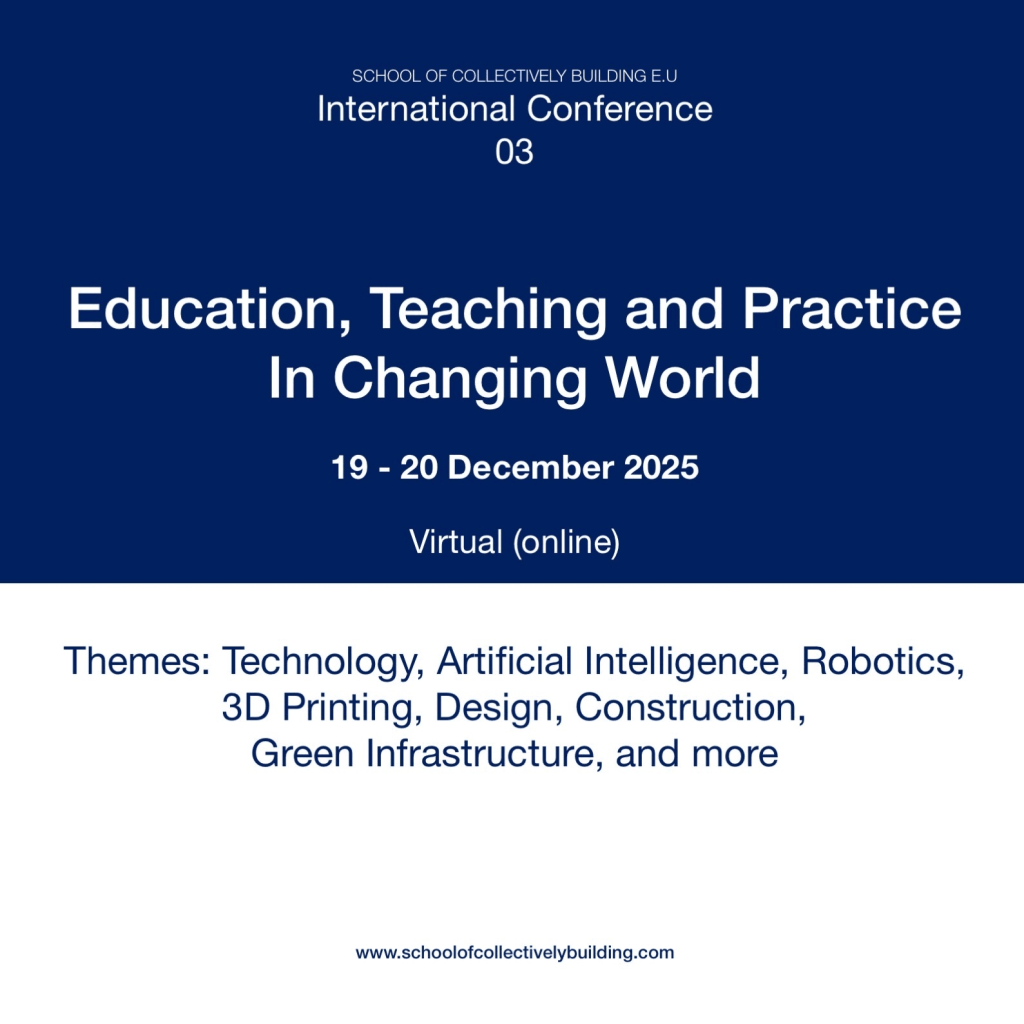
Through keynote addresses, panel discussions, and interactive Q&A sessions, participants will share insights, research, and practical strategies. The virtual format ensures accessibility for a global audience, fostering collaboration across borders and disciplines. Whether you are an educator navigating digital classrooms, a researcher exploring sustainable design, or a policymaker shaping the future of education, this conference offers a vital platform for exchanging ideas and inspiring action. We welcome submissions for presentations that address the conference theme. Topics may include (but are not limited to)
- AI in education
- Robotics in professional training
- Green infrastructure in urban planning
- The ethics of technology in teaching and practice.
The SOCB International Conference is more than just an event, it’s a call to rethink how we teach, learn, and work in a rapidly changing world. Together, we can shape practices that harness technology and sustainability for the benefit of all.
“Join us virtual on 19 – 20 December 2025 to be part of this global conversation.“
Keynote Speakers:
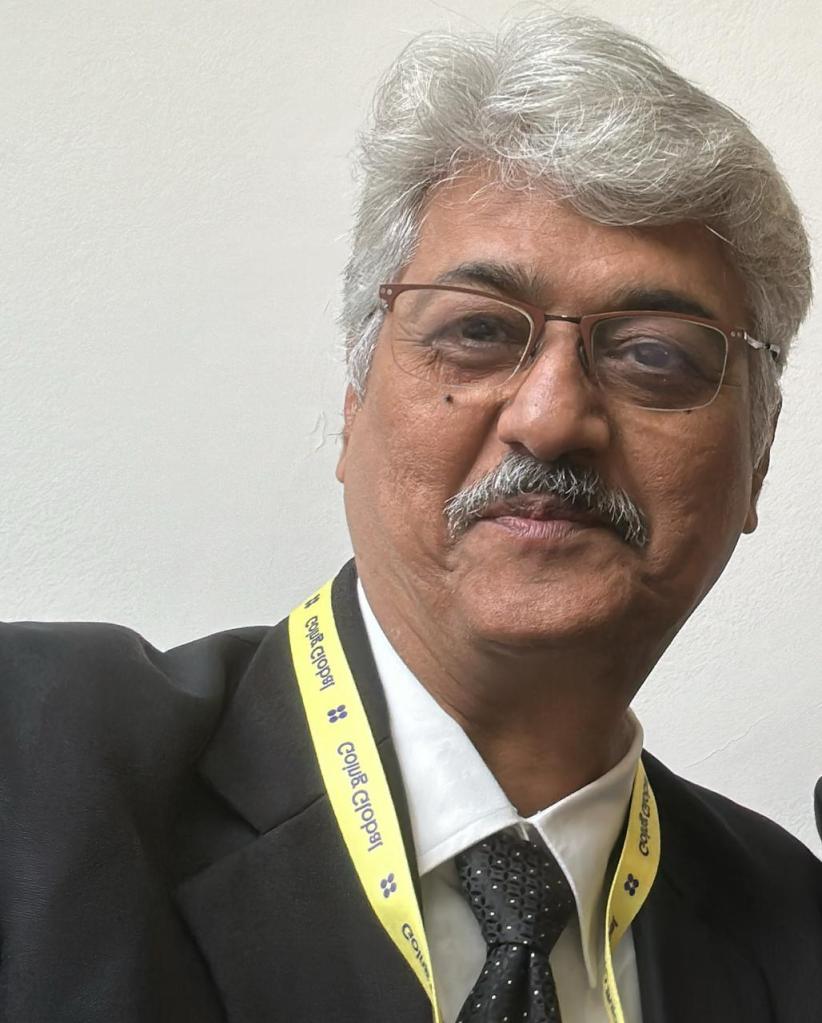
Prof. Rajiv Mishra
Rajiv R. Mishra is an Architect and Urban Planner based in Mumbai.He graduated in Architecture from the Academy of Architecture (1989) and completed his postgraduate studies in Town & Country Planning at the Government College of Engineering, Pune (1991). In 1997, he received the Netherlands Government Fellowship to study Urban Management at the Institute of Housing Studies, Rotterdam, Netherlands.
His special interests include Sustainable Urbanism, Community Architecture, Heritage Conservation, Technology in Building Management, Classical Arts, and the Education of Architects and Planners in a changing society. He has extensively explored these areas through various research studies, aiming to bridge the gap between education and practice.
In June 2000, he completed his Postgraduate Diploma in Management of Education with reference to Art & Architecture Institutions from the Department of Education, University of Mumbai. He has been teaching for 30 years and has conducted numerous seminars and workshops on Architectural Design, City Planning, History and Theory of Architecture, and Urban Management development at Sir J.J. College of Architecture.
He has served as Chairperson of the Course Committee for Interior Design and is currently a member of the Board of Studies for Art Education at the University of Mumbai. He also contributed as a resource person to IIT Mumbai for the first Solar Passive Architecture education handbook.
With 27 years of professional experience, he currently works on projects as the Director of the Sir J.J. College of Architecture Consultancy Cell. He believes in the significance of visual expression and has an ongoing passion for documenting visual experiences. To him, art is a cultural output and a celebration of the continuous expression of civilizations.
He has held several notable positions, including:
Chairman, All India Board for Architecture Education, AICTE (2010–13 and 2013–16)
Chairperson, NBA Evaluative Committee for Architecture Education (2011–13)
Elected Executive Committee Member, Council of Architecture (2012–2015)
Elected Member, Council of Architecture, New Delhi (2016–19)
State Government Nominee, Council of Architecture, for the term 2023–26
He has been a member of the Mumbai Heritage Conservation Committee for over two decades and has served as a Jury Committee Member for several projects of MCGM, MMRDA, and MHADA. As a former member of the State Environment Impact Assessment Authority, Maharashtra, for two terms, he was involved in the approval of several major projects across the state.
Since 2008, he has served as the In-Charge Principal of Sir J.J. College of Architecture at the University of Mumbai and was formally appointed as Principal in 2014. Since 2015, he has also been appointed by the State Government as the In-Charge Director at the Directorate of Art, Government of Maharashtra.
He was recently appointed as a member of the Academic Advisory Committee at the National Board of Accreditation (2023).

Dr. Elham K. Hassani
Elham K. Hassani has a 2022 Ph.D. in Architecture and Construction (Research Field of Urban Morphology) and a 2024 certificate of expertise in resilient urban regeneration from Sapienza University of Rome, where she has co-taught and supervised graduate theses. She has held visiting positions at Lund and Malmō Universities, and Tashkent University of Architecture and Civil Engineering. She co-leads Iran_Lab’s Call for Visions urban design competitions, editing, translating, and coauthoring two books on them published in Italy; and is Co-Director/EU of the Urban Construction Laboratory, a Berkeley, California, research think-tank. She is an associate editor of peer-reviewed international journals Architecture, Construction, Design; Built Form; and for the Architecture Technology International (ATI) 2024 and 2026 Conferences, and a peer reviewer for the Q1 journal SASBE, the academic publisher Routledge; The Journal of Architecture, Q1 academic journal of the Royal Institute of British Architects (RIBA); and the new Academia Engineering International Journal. Recent publications include Springer’s Persian Architecture (chapter on resilient elements), her pioneering use of AI in urban morphology for Built Form international journal and, in progress, articles on applying AI to aspects of urban regeneration for the Q1 journals Buildings & Cities and SASBE.
Publication:
All papers are subjected to a rigorous double-blind peer review process for inclusion in the SOCB Conference Proceedings Series. Selected authors, following review, may be invited to expand their work into comprehensive articles for the SOCB academic journal or contribute to specially curated conference books, further amplifying the impact of their research.
SOCB collaborates with esteemed international publishers to deliver high-quality academic content. Conference outputs include the SOCB Proceedings Series (ISSN: 3061-032X & ISSN: 3061-0338), special editions of the SOCB academic journal (ISSN: 3061-0338 & ISSN:3061-032X), and books co-developed with SOCB and external publishing partners. While submission of written papers is optional, those submitted should be approximately 3,000 words in length, with detailed formatting instructions provided after the conference.
Conference Formats:
- In-person (16-20 mins): Experience the conference live in the heart of Vienna, Austria, with opportunities for real-time engagement and networking.
- Zoom (16-20 mins): Join virtually from anywhere in the world, with presentations seamlessly coordinated by SOCB for an interactive online experience.
- Vienna (16-20 mins): For delegates attending in Vienna but presenting virtually via Zoom—blend the best of both worlds with in-person participation and virtual presentation.
- Pre-recorded (16-20 mins): Share your work through pre-recorded presentations or films, which will be available indefinitely on the SOCB Academic YouTube channel for ongoing access and impact.
- Written papers (3000 words): Regardless of format, all delegates are invited to submit full written papers for publication in the conference’s official proceedings.
Programme:
19 December 2025 – Day One (Virtual / Online)
- Session One: Keynote lectures, delegate presentations, discussion, and Q&A.
- Break
- Session Two: Delegate presentations, discussion, and Q&A.
20 December 2025 – Day Two (Virtual / Online)
- Session One: Keynote lectures, delegate presentations, discussion, and Q&A.
- Break
- Session Two: Delegate presentations, discussion, and Q&A.
Registration & Submissions:
Early Registration: 15 August 2025
Delegate Fee: €299 I Audience Fee: €99 Euro
Regular Registration: 15 October 2025
Delegate Fee: €399 I Audience Fee: €199 Euro
Late Registration: 30 November 2025
Delegate Fee: €499 I Audience Fee: €299 Euro
Click the button above to submit your abstract.
Questions: conference.socb@gmail.com
Disclaimers: SOCB strives to maintain the highest academic standards for publication. Therefore, all submitted full papers will undergo plagiarism and AI detection scrutiny. Papers (research articles, theses, case studies or essays) that fail these checks will be disqualified from SOCB publication proceedings, journals, and books. Once registered, the payment can’t be refunded, but you can attend the next conference.
 SOCB
SOCB 